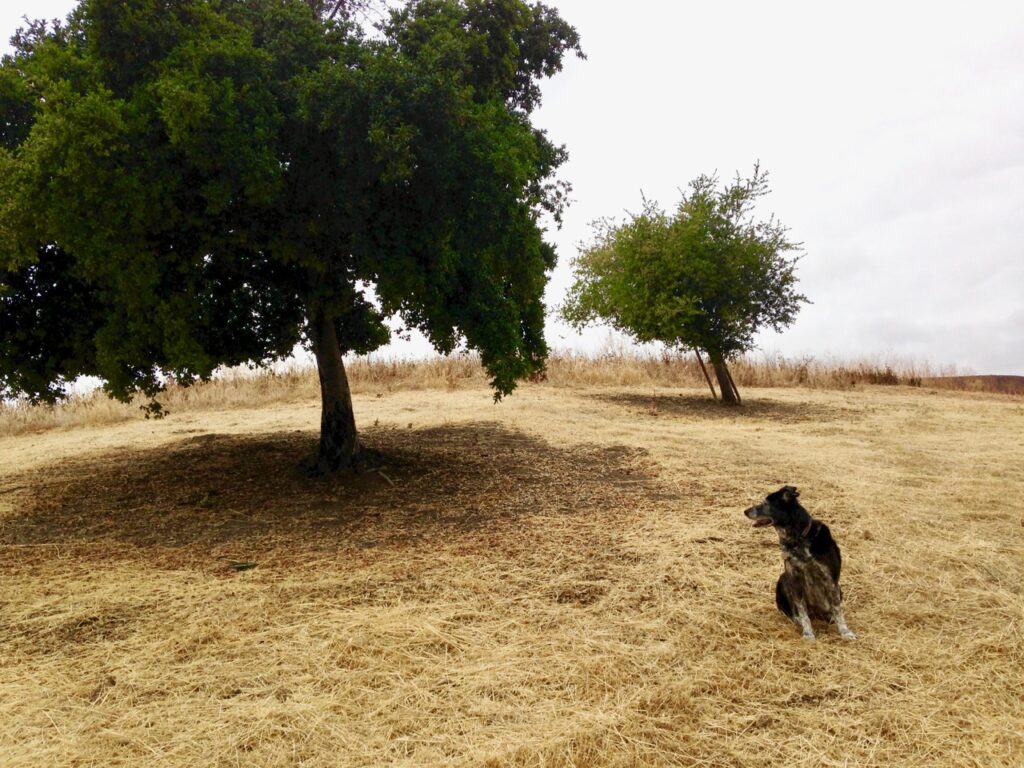
Catch and Release

Armen sat at his desk, watching the floaters in his eyes slide across the blackboard. With a ring of the bell, the schoolroom was filled with a muffled chorus of chairs shifting on indoor/outdoor carpet. Armen watched the sunlight flare through the exit. He watched the silhouettes of his classmates stream out into the light. He felt the sweat collect between his fingers and the bindings of his books, and he reached for his viola case.

The orderly glanced at him from her desk, and he uncoiled from his. He watched the carpet sweep rhythmically beneath him as the doorway approached. He didn’t need to look toward the door; he could track its approach from the light that poured from it. He approached the exit to the corridor, and once beyond the door, he stalled beneath the overhead vent windows. When he heard the orderly grab her things, he resumed walking out to Monroe Drive.

Stu, one of the neighborhood’s fledgling highwaymen, was waiting at the curb.

“I don’t like it when you make me wait,” lashed Stu. “What have you got for m—what’s in there?” Stu ripped the viola case out of Armen’s grip. He opened it, pulled out the viola, and began strumming it guitar-style. The bridge collapsed under Stu’s pounding.

violin, before and after

"Smashed Violin" - WilliamsStudio.com

“This thing is cheap!,” he complained, and with thinly-concealed guilt, shoved it into Armen’s arms, forcing Armen to drop his books.

Armen put the broken viola back in its case, picked up his books, and walked home. He walked through a light rain that night. The raindrops beaded up on the grass at his feet. There were deep holes in the ground—rectangular holes; three feet by seven. He stood and looked at the holes in the rain, and the raindrops ran off the turf into the holes, and the holes began to fill. As the water approached the rim of each hole, a body floated at the surface. The water overflowed the holes and flowed slowly past Armen’s feet. Each body floated in its hole as Armen turned to flee the water of the holes. He walked out through the night, but he could find no end to the holes, and the bodies, and the water touched his ankles. And he heard his sister calling. And he awoke.

Continue …

Hidden Valley

Armen had heard of Hidden Valley a number of times. He imagined that it must be in a deep, narrow ravine, easy to miss because of the overwhelming flatness of the Sink; easy to overlook like the underground gardens in Fresno.

Hidden Valley, by Gaius31duke

Hidden Valley, by Gaius31duke

Amid the two-dimensional vastness of the Sink, a highway overpass could seem like a violation of the laws of Nature.

Armen didn’t have any friends that he could trust not to turn on him for the slightest social advantage, except maybe for a schoolmate named Jake who lived near school. Sometimes Armen would go to Jake’s house after school to watch him torture his cat, wrestle a vicious dog, or light a fire in a trashcan.

One day, after Jake returned to school with stitches in his scalp from a recent dog fight, he invited Armen to go fishing with him at Hidden Valley. They dropped by Jake’s house so he could pick up his .22 caliber rifle, then they cut through a walnut orchard toward the fabled fishing hole.

Hidden Valley, it turned out, was not a valley at all, but rather a city park drawn out across a shallow flood course, featuring a muddy reservoir that the city imagined to be a pond, holding irrigation water from the adjacent Peoples Ditch. Only in the Sink could this be called a park, and with such an absurdly ironic name.

Armen looked down into the murky shallows as Jake popped little yellow capsules into the water. Carp broke the otherwise motionless surface and writhed. Pale carcasses floated, peaceful as the muddy water. Armen concealed his horror as Jake enumerated his success. When Jake realized he was being greedy, he offered up the rifle to Armen. Armen declined appreciatively, and Jake proceeded with the massacre. Once Jake was out of shells and had completed the final tally, they parted and each headed home.

Continue …

Clockwise

Where Armen lacked flow he relied upon routine. When intuition abandoned him, he could always find a clock. As he sat in class, he found regularity in the ubiquitous dial that so dominated the front wall. It stood high in the room, peering over the teacher’s shoulder like an all-seeing eye, bullying the captive congregation like a crucifix.

Late in the day, as the second hand completed its final revolution before the bell, the floaters in Armen’s eyes slid this way and that across the wall. With a ring of the bell, the schoolroom was filled with a muffled chorus of chairs shifting on indoor/outdoor carpet. Armen watched the sunlight flare through the exit, and he watched the silhouettes of his classmates stream out into the light. He felt the sweat collect between his fingers and the edges of his books. He reached for his viola case.

clock-head The class monitor, having completed her doctrinal duties, glanced at Armen from under the clock, and he uncoiled from his desk. Keeping his eyes low, he watched the carpet sweep rhythmically beneath him as the doorway approached him. He didn’t need to look toward the door; he could track its approach from the light that poured from it. He turned into the exterior corridor, and once past the door, stalled beneath the overhead vent windows. When he heard the monitor grab her things, he resumed walking out to Monroe Drive.

The triplet divining rods of the oracular disk turned in Armen’s mind even when no clock was in sight. Each day, he was reborn and so too was his world. His daily movements, his subconscious physiology, and even his dreams were governed by the wheel, his world remade anew for another replay every time the divining rods aligned.

Still, there were yet a few events in Armen’s life that did not repeat; not, at least, on a daily basis. He did not know whether these promised to free him or whether they threatened shake the foundations of his punctual world.

Continue …

The Water Lantern

One spring night, Armen waded along the riverbank into the shadows under a bridge. He noticed that the river level was rising. He climbed up the bank, and soon found himself trapped under the bridge by the rising water. The river continued to creep up the bank after him, compelling him into a culvert under the road. The river followed him up the concrete pipe. The culvert was longer than he’d expected. As the floodwater crept toward him, the pipe grew progressively narrower, and imperceptibly transformed into translucent rubber—like medical tubing. It was filled with light. “Daylight?” he wondered.

The water tickling his neck pressed him ever forward. As the warm river water crept up to his cheeks, he pressed his face upward into the latex tube, until he could press no further. He gasped for air and convulsed.

His body lurched and he gasped again. He awoke to find himself sitting on his bed, soaked in urine from his collar down.

The hot, pungent juice that spilled out of him at night left him feeling impotent against his own body.

Bed wetter, by Nat Meade

Bed wetter, by Nat Meade

Adults believed that kids wet the bed to get attention, but the attention drawn by wet, smelly sheets and pajamas was attention that Armen could do without. Perhaps something deep within him had intended this outcome. Perhaps he had a subconscious need for isolation and exile. Perhaps pigs play pinochle.

Thus began a typical day, and the routine continued. He stripped down, pulled his sheets off his bed, rolled up the pajamas, underwear, and sheets into a big wet wad, and dumped it all in the laundry room on the way to the bathroom. He’d stuff it in the washer and start the load if the machine was unoccupied. He wasn’t much for household chores, but this was no chore: it was a crime scene. He avoided sleepovers, boy scouts, and any outing that might lead to sleeping in the presence of his peers. Beyond all that, Armen exhibited a general mistrust of his body and the circuitry that controlled it. He suffered from a slight tremor that forced him to clamp down with his fingers where others might simply rest their fingers in position. He couldn’t just rest a pencil between his fingers: he had to grab it as though he were in kindergarten. Though his right arm could move with a fluid motion that gave him a talent for the viola, yet he mistrusted his fingers as they gripped the bow frog or moved between finger positions on the fingerboard. “Relax your grip!” the old German music teacher would scold. Still, he practiced faithfully, hoping that one day something would fall into place.

It seemed to Armen that his tremor sometimes caused his very mind to quake. As challenged as he was during viola lessons, he was doubly handicapped on stage. The music on the page would begin to swim before his eyes. He could only hope to piece together the music as his eyes caught fragments floating by, like boards in a flood. He could capture a sequence from memory as he was cued by the others in the orchestra. This experience compelled him to memorize the music, though he was not a gifted memorizer.

Armen’s very grasp of language seemed tremulous. Sentences seemed to just flow out of others as though they spoke instinctively, as though they merely had to listen to themselves speak. There was little conscious effort involved, but not so for Armen. He often found himself deliberately constructing sentences. He wasn’t a stutterer, nor was he at a loss for words, but he failed to achieve fluency. The words in his head trembled like the notes on the music sheet. It was as though he were trying to speak a foreign language that he’d learned by memorizing a dictionary. He had enough words at his disposal, but he often missed the most familiar, most colloquial term. He spoke something like someone who’d mastered the language without ever having heard it spoken. He might have wondered whether this just wasn’t his country if he didn’t already know the problem to be too general to justify such a specific cause.

All the trembling culminated in a vague sense that Armen was constantly striving to play at living, whereas other kids seemed to live quite naturally. He was an actor, a pretender—a stranger in his own town.

Continue …

Extracurricular Education

The field trips available to elementary school pupils of Slough City featured visits to Forestierie Underground Gardens and Roeding Park in Fresno, and closer to home, Fort Roosevelt, Cross Creek Dairy, and the naval air station. The underground gardens featured a house that a man had dug out of the valley floor after realizing that the hard pan wouldn’t permit him to farm on his land. Roeding Park featured a zoo—complete with an ape accomplished at the fecal toss—and an amusement park. The naval air station gave local kids a tour of the great American war machine, enough of a spectacle to spark the dreams of many a boy.

Aside from sulfurous tap water, bovine air, and Chinese escargot, Slough City’s big draw was Fort Roosevelt, a science center for kids made in the style of an old Western fort. It had been the brainchild of a school principal who’d proudly claimed to have hated school as a child. It was also a shining example of what a handful of citizens can achieve with limited resources and a measure of ingenuity and determination. The fort’s fences were made of decommissioned utility poles. Inside the fence line, the fort featured a duck pond stocked with sport fish, Slough City’s historic Santa Fe railroad depot, an animal rehab center, and a genuine log cabin that featured a hearth made with rounded rock from the Kings River. It was a phenomenal success, and an embarrassment to the town’s bored of education. The bored, dug in deep in its campaign against science and individual initiative, would eventually succeed in destroying the fort by means of chicanery and stubborn neglect.

After Armen experienced Fort Roosevelt, he was suddenly moved to construct a fort of his own in the walnut tree on the back lot. He dug a pair of holes near the tree and linked the holes with a miniature ditch. He fancied the two holes to be miniature ponds, and kept them filled with water much of the time. The ponds began as mud holes, but they soon cleared up and gave rise to forests of clover on their banks. These ponds gave Cindy the idea of planting crops in the moist soil around the ponds and along the ditches. In no time at all they were growing carrots, parsley, corn, melons, and pumpkin. classroomBy the time Cindy’s class visited Fort Roosevelt, she already had a Fort Roosevelt of her own, though without such a variety of animals.

When it was Cindy’s turn to visit the zoo in Fresno, she became fascinated by the apes there. She stood outside the pens, watching the expressions gestures of her distant cousins. They were quite unlike people in many ways, yet also strangely similar. Cindy looked at their arched fingers and hand-like feet, their shrunken heads, and their protruding faces. They had big mouths, teeth, and lips—and they had big guts too. They’d probably do all right on a raw food diet. On top of all that, she thought, they had all day to pound and chew. They had nothing better to do.

Apes were hairy. They probably didn’t need a fire to keep them warm on a chilly night. They swung around overhead as easily as people walked on the ground. They didn’t need a campfire to protect them at night. They were free of fire, she thought, and just then an ape grew annoyed with Cindy’s inquisitive stare and slung a handful of feces her way. Cindy, being attentive and quick, ducked out of the missile’s way. A boy standing behind her was not so prepared.

The field trip to the dairy is always an eye-opener for kids who might otherwise not give a thought to the origins of that homogenous white fluid that was delivered to them in little cartons every day at noon, but Cindy gained much more than that from the trip. Cindy was surprised to learn how much the dairy and her school had in common, and how much the daily routine of a dairy cow resembled the daily routine of a student. Teachers weren’t such sages; they were just livestock managers. This explained a lot, and it gave Cindy a sense of perspective on school and life. Though it didn’t make her any more predisposed to the life of a dairy cow, it did give her a better understanding of the unspoken rules of the game. Now she was better equipped to play along.

Continue …

A Night at the Hacienda

One hot night, later in the Armenian summer of 4465, the Adroushans were watching TV before bed. The windows of the house were open to prevent the house from functioning as an oven. The Adroushans heard shouts outside that rose above the TV laugh track. Armen ran out to see what was going on. He burst in a moment later to report that the Hacienda was on fire, just as the sirens began to wail.

The Hacienda was a Mexican restaurant down the street. Armen grabbed his tumbler and ran back outside. Garegin and Siran followed. The crying of sirens accompanied them. Cindy, who’d come in for the evening, waited inside, then thought better of it, and walked out to the street to keep a watchful eye on the fire down the way. Her family was down at the corner, their astonished faces glowing.

Razmik Samvelts, “The Last Supper”

Cindy didn’t approach the ruins of the fire for days, but spent hours in front of her own house keeping an eye on the wreckage, as if to make sure the fire didn’t come back to life. She got precious little sleep over those days. Finally, Armen talked her into getting a closer look so that she’d know that the fire was truly dead.

Once Cindy gained the courage to approach the ruin, she would walk by it often, over and over again, looking into the black, soggy corpse. Neighbors, kids at school, and shoppers in the supermarket checkout line all wondered aloud about the cause: Arson? A short circuit? A casually discarded cigarette? A gas leak? A grease fire? Cindy listened, and she silently inspected each suspect that had been named.

“How could grease start a fire?” she asked herself, and then she asked her mother and father. She tried asking a librarian. She was given a book that gave an explanation, but she needed help understanding the explanation. She figured that a fireman might know, so she dropped by the fire station that was a block out of her way on her way home from school. One of the giants—not coated yellow now but uniformed in blue—took time to explain to her how water can expand quickly when heated, and how steam could blast out of a pan like steam from a kettle or even an old locomotive. The expansion of steam, he explained, would suspend the grease while the grease continued to burn. Cindy was stunned by the image that the fireman’s words painted in her mind, just as he was charmed by her curiosity. He invited her to drop by the next day, saying he’d give her a demonstration if she brought permission in writing—fire permitting.

kitchen fire

a kitchen fire simulation

Cindy appeared punctually on the next day with proper documentation. Several days later, the fireman introduced Cindy to his chief, and the three proceeded back to the station’s drill yard. Her host, like some diabolical chef, superheated some grease in a pan. The chief checked the setup. The pan sat under a suspended hose the chef had rigged to spray water onto the grease. He lit the grease and opened the water valve, and the hose sprayed water through an attachment onto the fire. In a burst of steam, burning grease shot skyward. Cindy trembled, awestruck, as the firemen nodded and grinned to each other.

Though fire seemed to be a ubiquitous hazard, it was in the kitchen that fire threatened the most.

One evening, Cindy stood in the kitchen doorway and watched her mother cook. Siran eventually turned and replied “Yes?” to Cindy’s tireless watch.

Cindy asked, “Why do you cook so much?”

“So you can eat.”

“I don’t have to eat cooked food. You don’t have to cook for me.”
Siran chuckled. “Well, I’ve got to cook anyway.”

“That’s okay. But I want you to know: I can eat raw food instead.”

“Really! Well I think that would be a fine thing to try.” Siran encouraged her with a challenge.

“Okay,” the girl acknowledged, and at that moment, Cindy chose to eat only raw foods. She stubbornly accepted the challenge, hoping to convince her mother that cooking was unnecessary. At first, she’d simply avoid cooked meals, but she discovered over time that cooked foods were everywhere. Her mother saved a knowing grin for every time a cooked item was stripped of its disguise. After a while, Cindy would not permit herself processed foods that had been cooked in a factory, such as bread, oats, cold cereal, and pasteurized milk. The raw food project turned out to be a Spartan, lonely, and labor-intensive experience for Cindy, but Cindy was naturally Spartan. She was up to the challenge—for a while.

Having sworn off fire as a digestive aid, Cindy lost weight. Eating raw food meant a lot of chopping, pounding, and chewing, Cindy made extensive use of her mother’s mallet, shredder, knives, and blender, but then one morning her eyes followed the power cord that snaked from the blender to the wall outlet, and the blender was out—but not for long. Even as Cindy reached the height of commitment, she felt tired. She felt slow. She gave in. She gave in to the flame, but not completely. Blenders ran on high voltage and pulled a good current, but blenders didn’t tend to catch on fire. They may have got the majority of their power from fossil fuels, but a blender itself didn’t operate at high temperatures, and it didn’t involve an open flame. Cindy found room for compromise. The same reasoning applied to processed foods. Maybe they’d been cooked, but not in Cindy’s home. Cindy conceded a role to fire—at a safe distance.

Continue …

A Weekend in Glendale

Not long after the toaster incident, the Adroushans paid a visit to Siran’s parents, who lived down in Glendale.

Candles were lit throughout the Mehranian home, so Cindy hugged her grandparents and wasted no time in finding a flame-free corner of the den. She sat in an old easy chair, under the unflickering yellow light of the lamp that sat on the end table by her side. She looked through the light at the bookcase against the near wall, and her eyes scanned the words on the book bindings. Many of the titles were written in Armenian. Cindy could read the letters, but not all of the words. One title simply said “Mihran”. She got up out of the chair and pulled the book off of the shelf.

Minas Avetisyan: “Memory” (1973)

When she slid the book out from among its companions, she was startled by the graphic in the center of the title-free front cover: a fire—a fire rising out of a twin-handled chalice. Her hand jumped a bit and pushed the book back in, but then it began to ease the book back out.

She squatted there with the book in her hands, and began to leaf through it. It was all in Armenian. It seemed to be a long poem. There were no paragraphs; only lines. There was someone behind her.

It was Tateek, her grandmother, and she asked Cindy, “Can you read that?”

“No,” Cindy replied. “Just some of the words.”

“It’s a good old story.” Tateek continued.

“Yeah?”

“Yeah. You like me to read it to you?”

“What’s it about?”

“It’s a very old story about an Armenian boy named Mihran,”

“Mihran—like your name?”

“Your name too.”

“Is he a Mehranian?” Cindy probed.

“I don’t know,” Tateek answered. “He lived a long time ago.”

“Was he a saint?”

“I—I think you can say that. He—he was a hero.”

“Was he a warrior?”

“No, not a warrior, but brave, and a good horseman.”

“Why is there f—fire on the cover?” Cindy asked.

“Because he saved many fires.”

“Saved—fires?” Cindy was perplexed. “Why?”

“That was a long time ago. That was before Jesus, when the people could not pray to God without fire—like Moses did.”

“Oh,” Cindy murmured. “What did he save them from?”

“A great conqueror named Alexander, who conquered all the world, and he put out many of the peoples’ fires, but he didn’t conquer Armenia. So Mihran rode from Armenia to save the fires.”

As Cindy gazed at the book’s cover art, Tateek tried to explain. “I know it seems silly for a man to be a hero for saving something that you are so afr—something that is so dangerous. But to those people, they needed the fire. They saw that the fire would rise to heaven like a bird, and also they needed it to warm them in the winter and light their nights. Today you have church for praying to God, and you have lamps for light and—well, you see my point?”

Cindy nodded, but cautiously.

“Cindy?” her mother called from the entryway, and she soon appeared. “Cindy, when you and Tateek are finished, could you bring your bag in from the car, please?”

Tateek and Siranush prepared a fine Armenian feast that evening, for this was a very special occasion (the Adroushans didn’t get to Glendale very often). The next day, Papeek insisted that they mark the occasion with something special, so they had a picnic in the park instead of attending church, and after that they went to Chavez Ravine to watch the Dodgers and the Giants play.

Continue …

In the Heat of the Kitchen

Cindy’s parents dreaded those inevitable occasions when fire would assert its ascendancy, such as it did on the day the toaster shorted out and ignited. light bulbCindy saw the flames. She retreated through the nearest doorway and watched her mother suffocate the fire with a stack of hand towels. Afterward, Cindy saw the scorched bread. She recognized the fact that no gas had been involved. The toaster had been plugged into an electrical outlet, like a lamp or a television. She saw the blackened faceplate. She did more than see it: she watched it. She kept watch on it for hours each day. Finally, her parents decided that they would have to replace the faceplate to help Cindy get her mind off the fire. From the day the toaster caught fire, Cindy was aware of every electrical object in the house. Her vigilance tapered off, but only over the passage of months. It was only a matter of time before fire would again find some novel expression, knocking Cindy and her family off balance once again.

Continue …

Wild Kingdom

The toads crawled like commandos across the Sink, under cover of darkness, reaching out to the left and right on their cold and clammy-white bellies. Unnoticed, they slipped past the cantaloupe and corn and parsley. One toad would silently drop into a trench, then another would fall into a vertical shaft; one not knowing the fate of the next, unable to proceed with the nocturnal assault.

Two human feet perched at the edge of the trench, and then stepped back. Little tan shins lowered to the earth, and a skirt settled over the shins and feet. toad pileCindy leaned down from her knees and reached down to grab a toad out of the trench. She got up to her feet, and put the toad into a nearby bucket. Armen brought a couple toads to the bucket from a nearby shaft.

Cindy and Armen started with small game, first netting insects and trapping frogs. Next came lizards, and with time and a tip here and there from Garegin or Saroyan, squirrels and birds.

Cindy had always been coordinated and physically confident. When Armen went out to play baseball in the nearby lot, Cindy would follow, just as she would later accompany Armen into organized ball. None of the boys ever complained. They needed bodies, and Cindy could play. She had an eye for projectile motion, and this was, after all, the era of Billy Jean King and the “Battle of the Sexes.”

But Cindy wasn’t out to prove anything any more than any other kid on the lot. She just liked the game. She enjoyed the challenge. She enjoyed the feeling that contact with the ball gave her. Still, she didn’t always play, and it wasn’t always baseball season. Cindy spent a lot of time on her own with her critters and her traps. She was just as happy on her own as she was with the neighborhood gang, and so it was that when Armen began to lose interest in competitive sports, Cindy simply drifted away from it all.

I remember the time I let Cindy try my new slingshot. She took it and knocked a walnut out of our tree. Her arm never seemed too shy to pull hard. Her amber eyes always seemed steady and undistracted. They seemed to take hold of whatever they focused upon—the eyes of a hunter.

Cindy was constitutionally confident, though she didn’t always know what to do. She was often uncertain about what her peers and teachers expected of her, but that uncertainty was not debilitating. She was simply uncertain about them. She never seemed to crave anyone’s attention or approval, though she could certainly use both. She was social. She could engage anyone with a natural charm, but she rarely made an effort to keep anyone close or committed. She was far from incurious, but she sometimes seemed aloof toward social obligations. It seemed that the society of her peers, though of interest to her, did not bind her. She did reasonably well in school, though she was not highly motivated or disciplined. She didn’t seem interested in proving her worth to anyone. She suspected that she was different, but that didn’t seem to trouble her.
Fire was the one exception. In spite of all her inner stability, Cindy continued to manifest an inconsolable anxiety about fire.

Continue …

Harvest Ball

On odd Sundays, the Adroushans would drive up to Fresno, attend church services with Grandma and Grandpa Adroushan, and then spend the afternoon at Garegin’s boyhood home. They visited Siran’s mother and father much less often, as the Mehranian grands had moved to Glendale shortly after Siran had earned her degree. Whereas the kids just called Garegin’s parents Grandma and Grandpa, they called Siran’s parents Tateek and Papeek, which mean just the same in Armenian.

pomegranate tree, from a medieval Armenian medical manuscript

pomegranate tree, from a medieval Armenian medical manuscript

One autumn Sunday afternoon, Cindy and Armen were helping their grandfather harvest pomegranates in his backyard. Grandpa tossed a pomegranate down to Cindy, who stopped its fall with Grandpa’s old baseball mitt, which was smaller than modern mitts but still too large for Cindy. The heavy fruit rolled from the dangling glove into Cindy’s other hand.

“That-a-way to use both hands,” the old coach commended. “I think that ought to be enough.” He took a pocketknife out of his overalls and cut the stem and cap off the fruit, and said, “Anyone up for a friendly game of pomeball?”

Armen hurried off to fetch his t-ball bat, and he wasted no time in getting back. He found his place down lawn and turned his shoulder to his grandfather. The old man tossed him a pomegranate, and Armen foul-tipped the hard, red ball down into the lawn.

Armen missed the next pitch completely. Strike two. Cindy waited at Grandpa’s side, hoping to field anything that Armen might manage to hit.

Armen hit the third pitch and cracked the game ball open. A new game ball was selected, and Cindy took her turn at bat while Armen dug into his ball. She hit the first pitch right past Grandpa’s shin.

They called it a game, sat together in the shade of an apricot tree, and picked the sweet arils out of their respective game balls.

Continue …